Pipe fabrication — the paperwork is part of the product
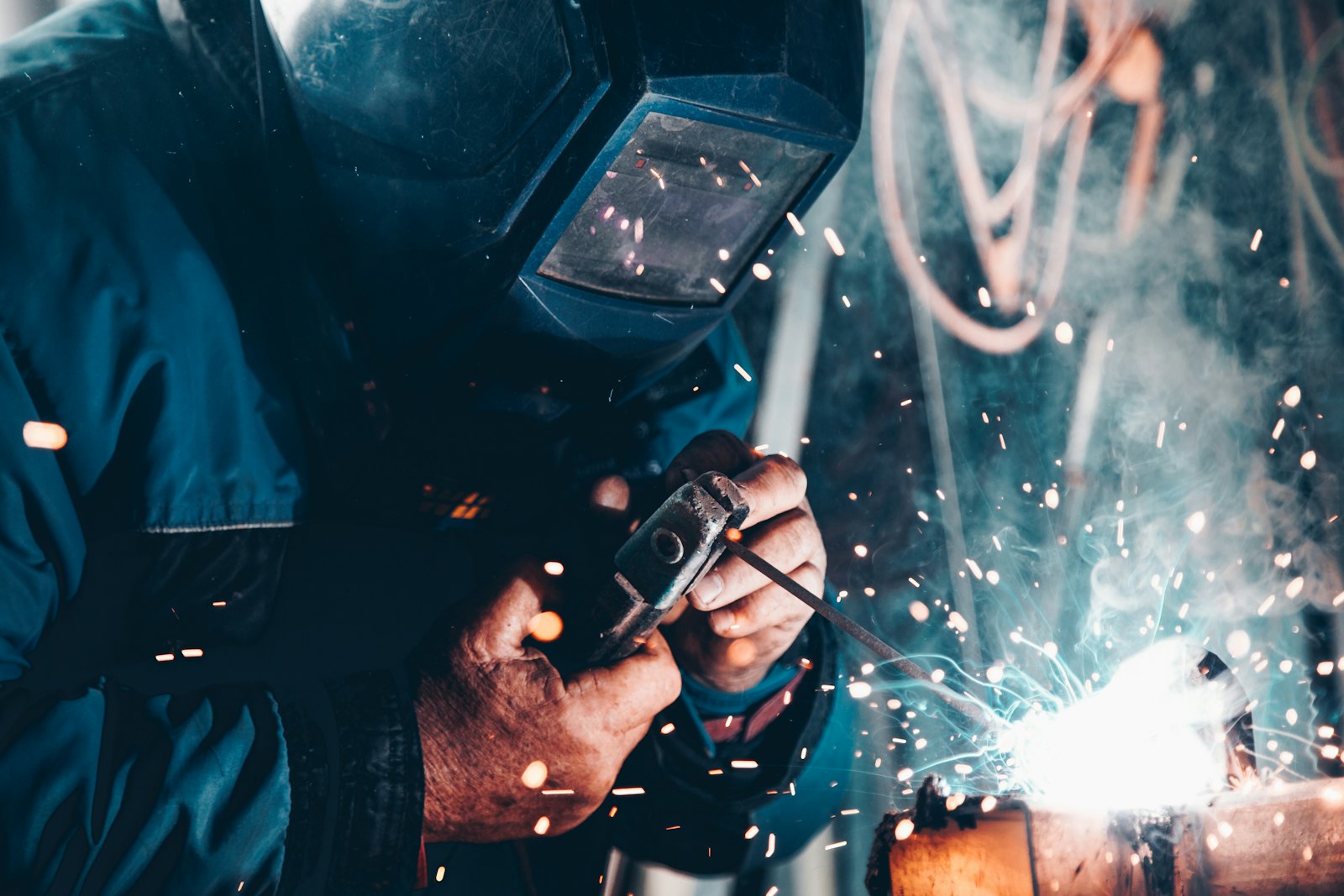
There are two ways to look at a fabricated pipe spool. One view is that it's a weld: is the joint sound, does the geometry match the isometric, does it hold pressure? That view is necessary but not sufficient. The other view is that it's a documented object: can you prove, months after installation, what material it was made from, who welded it, under which procedure, and what tests were done? That documentation is what makes the installation auditable — and in many industries, it's what makes it insurable.
Material traceability is not optional in process industries
For oil and gas, chemical processing, and most regulated industries, every piece of pipe and every fitting needs to be traceable to a mill certificate. The certificate confirms composition and mechanical properties for the actual heat and lot — not just the grade. "It's 316 stainless" is not traceability. "Here's the cert for heat number X" is.
This matters because ASME B31.3 and similar codes require it, inspectors check for it, and insurers ask for it when something fails. If a fabricator can't provide cert traceability for the material in a spool, that spool cannot be used on a code-compliant installation. Full stop.
Welding procedures and welder qualifications
A code-compliant weld has three documents behind it: the Welding Procedure Specification (WPS), the Procedure Qualification Record (PQR) that proves the WPS produces sound welds on that material, and the welder performance qualification (WPQ) showing the welder who ran the job is qualified to do so.
These aren't bureaucracy. The WPS controls the variables — preheat, interpass temperature, filler material, travel speed — that determine whether a weld will hold in service. If those variables aren't controlled and documented, the weld quality is only as consistent as the welder's habits that day. Good habits are not a quality system.
NDT: what gets tested and why
Non-destructive testing for piping typically involves one or more of: radiographic testing (RT), ultrasonic testing (UT), liquid penetrant (PT), or magnetic particle (MT). Which method is specified depends on the material, the weld joint type, the service conditions, and what the applicable code requires.
A few things worth knowing:
- Spot RT on butt welds is common for moderate-service carbon steel systems. It catches volumetric defects — porosity, inclusions, lack of fusion.
- 100% RT is typical for high-pressure, high-temperature, or toxic service. The cost is real but so is the consequence of a missed defect.
- PT or MT on socket welds and fillet welds catches surface-breaking cracks that RT misses on those joint geometries.
The NDT reports should reference the weld number, the technique, the operator, and the result. If a shop delivers spools without weld maps and NDT records, you have no way of knowing which welds were tested and which weren't.
What separates good pipe fabrication from average
It's mostly the discipline of the documentation system. The metalwork skills exist at a lot of shops. What doesn't always exist is the system to track a pipe spool from material receipt through fit-up, welding, PWHT (if required), and NDT to final dimensional check — with records tied to a spool number that matches the isometric.
That system is what you're buying when you engage a fabricator for process piping. The weld is visible. The documentation tells you whether the weld you can see is the weld that was actually qualified.